Featured

Overcoming Emotional Trauma

WHAT IS TRAUMA

Traumatic stress is a normal reaction to an abnormal event. Usually, symptoms get better with time, but people with more intense symptoms may need professional help.

Or Trauma is the result of a negative event. It occurs when you feel emotionally or mentally hurt by something that has happened.

The trauma isn’t the event or experience itself but rather your body and mind’s response to it. Traumatic stress affects the brain, which makes it crucial to take steps toward recovery and mitigate its negative effects and impacts as much as possible.

Examples of traumatic events include the death of someone you love,
experiencing abuse, a plane or automobile crash, etc.

EMOTIONAL TRAUMA

The emotional trauma you experienced when a painful life circumstance took place may have been a one-time event or recurring over a period of years.

Either way, it left a mark. And you can’t seem to shake it. As long as you tolerate lingering symptoms of emotional trauma, you’re allowing the enemy to keep you shackled.

Just like Jesus did for Shadrach, Meshach and Abednego, He wants to lose you from your shackles and set you free. He wants to remove all evidence of the trauma you’ve experienced, so you can live a life of abundance. No matter what you may have endured, emotional trauma is not a life sentence. You can take back your life and heal! Learn how to overcome emotional trauma. with help from God’s Word.

Emotional traumas can include:

1. Rejection, neglect, criticism or abuse as a child

2. Experiencing a broken home as a child

3. Divorce

4. Betrayal

5. Loss of a family member

6. Extreme financial pressure or loss.

Biblical examples

1. Hagar in Genesis 16

2. David struggled with troubling thoughts and despair (Psalm 38:4).

3. Elijah was discouraged and worn down (1 Kings 19:4).

4. Job suffered from grief, loss, and illness (Job 3:11)

COMMON RESPONSES TO EMOTIONAL TRAUMA:

1. Guilt

2. Shame

3. Anger

4. Fear

5. Grief

6. Depression

7. Rejection

8. Feelings of inadequacy

9. Defensiveness

10. Criticism of others

11. Shock and disbelief

12. Helplessness

13. Relief

Read Ephesians 6:12

PHYSICAL SYMPTOMS

1. Feeling dizzy or faint

2. Trembling or shaking

3. Rapid breathing

4. Racing thoughts

5. Changes in sleeping pattern (insomnia)

6. Unexplained aches and pains (headaches, muscle aches)

7. Loss or increase in appetite

8. Nightmares,

9. Easy startle response,

10. Increased anxiety,

11. Confusion,

12. Irritability

13. A sense of isolation

14. Fatigue,

15. Racing heartbeat, 

16. Tension 

17. Flashbacks 

18. Conversion disorder (aka functional neurological disorder), which can cause numbness, blindness, or paralysis.

19.

FIVE THINGS THE SCRIPTURES TEACH US ABOUT TRAUMA AND SUFFERING

1). That God is present and in control of our suffering
Firstly, God is present and in control of our suffering. In times of great suffering and pain, we often feel the farthest from God. Look at David ( Psalm 13:1), Jeremiah (Lamentations 3:8) and Job (Job 9:16). Even Jesus at the height of his pain cries out “My God, my God, why have you forsaken me?” (Matthew 27:46)
God is sovereign despite our circumstances. He created all things and He controls all things ( Deuteronomy 4:39; 1 Chronicles 29:11; Psalms 103:19; Daniel 4:35; Colossians 1:15-17).
He allows us to experience the consequences of sin while remaining fully in control of all things including Satan, who can only bring suffering into our lives if God allows it (Luke 22:31; Job 1:12; ). God is in control of our circumstances, and He wants to transform us into the very image of His Son.
2). That God is good and cares for us
“How could a loving God allow __________?” Fill in the blank with any horribly traumatic event that occurs here on planet Earth. People often use this statement to argue against not only the love of God but also the very existence of God. But God does love us and that is evident in our redemptive history. The creator of the world made a way for disobedient, powerless creatures to come into an eternal relationship with Him. He is patient and gracious. He became one of us (John 3:16) and then sacrificed Himself for us (1 John 3:16). Self sacrifice is the ultimate act of love (John 15:13). God is indeed good and He longs to be in an ever deepening relationship with us.

3). Through our trails and suffering we have an opportunity to draw closer to God
Even Jesus was sad when he went through difficult times — at Lazarus’s grave, in the garden of Gethsemane, and on the cross. The third truth we are called to recognize is that through our trails and suffering we have an opportunity to draw closer to God.
During the easy times we often become self-reliant, forgetting our need for God. It is in the hard times, when our faith is tested, that we recognize our need for complete dependency on Him ( James 1:2).
We are ever being conformed into the image of Christ and suffering is a
necessary part of that transformation (James 1:4; Romans 8:29; Philippians 1:29).
4). Jesus understands what it is to suffer
Jesus understands what it is to suffer is the fourth truth. We do not worship a distant, unapproachable God. We worship a God that knows what it is to be human (1 Peter 2:21). He knows what it is to suffer ( Hebrews 4:15).
Just think about Jesus’ life for a moment. He didn’t experience just one
traumatic event during His time on Earth. His whole life was full of suffering. The prophet Isaiah told of His suffering hundreds of years before His birth (Hebrews 2:17-18). He was born into unimaginable poverty in a country occupied by a cruel army (Isaiah 53:3-5). He narrowly escaped a mass slaughtering of
children that was ordered because of His birth (Luke 2:1-7). He was
physically assaulted by Satan (Matthew 2:16), persecuted because of His teachings ( Matthew 4:1-11), thought insane by His family ( Luke 4:28-29), betrayed by His own disciple (Mark 3:21), deserted by His friends (Mark 14:43-45), falsely arrested (Mark 14:50), publicly humiliated (Mark 14:56-59; Mark 15:16-20), beaten to the point of death (Luke 23:8-12), and then slowly and painfully publicly executed by crucifixion as a common criminal (Matthew 27:26).
5). Our identity is grounded in Christ
Finally, our identity is not defined by traumatic events or suffering but is
grounded in Christ. God does not see you as a victim. He sees you as His child. The scriptures tell us that as children of God, we were chosen before the creation of the world to be holy and blameless adopted sons and daughters, lavished with grace, redeemed, forgiven, given spiritual wisdom and understanding and marked with the Holy Spirit (Matthew 27:33-39). We are in Christ! We sit at the right hand of the Father! We have His righteousness! We must not allow tragedy or circumstances to define who we are or how we live.

HOW TO DEAL WITH EMOTIONAL TRAUMA

1. Be willing to overcome emotional trauma/ Accept your feelings

2. Stop the blame game

You cannot blame your fears, insecurities, negative attitude, failures, anger or any other behavior on anyone but you. Go to Jesus and let Him take every negative feeling off your shoulders and out of your life forever. Allow Him to wash away the past and bring you into a glorious future!

3. Forgive

Unforgiveness blocks every good thing

4. Fill the void

Resist fear.
Replace a spirit of fear with strong faith.
You can’t just say, “I won’t criticize others anymore.” You have to:
See yourself the way God sees you and receive His love.
Stop criticizing yourself.
Look for the best in others.

Volunteer your time, give blood, donate to a favorite charity, or comfort others.
Connect with others affected by the traumatic event

Practice relaxation techniques such as meditation, yoga, or deep breathing to
reduce stress, ease anxiety and depression, and improve your sleep.
Schedule time for activities that bring you joy

5. Minimize media exposure

Limit your media exposure to the traumatic event. Don’t watch the news or check social media just before bed, and refrain from repeatedly viewing disturbing footage

Try to avoid distressing images and video clips.

6. Challenge your sense of helplessness

Give yourself time to heal and to mourn any losses you’ve experienced.
Don’t try to force the healing process.
Be patient with the pace of recovery.
Be prepared for difficult and volatile emotions.
Allow yourself to feel whatever you’re feeling without judgment or guilt.

7. Get moving

Try exercise that is rhythmic and engages both your arms and legs. Walking,
running, swimming, basketball, or dancing are good choices. Aim to exercise for 30 minutes or more each day
Boost your energy and motivation. If you’re struggling to find the energy or
motivation to exercise, start by playing your favorite music and moving around or dancing. Once you get moving, you’ll start to feel more energetic.

8. Reach out to others

You don’t need to talk about your traumatic experiences. Reaching out
Expand your social network.

9. Eat and sleep well

The food you eat can improve or worsen your mood and affect your ability to cope with traumatic stress. Eating a diet full of processed and convenience food, refined carbohydrates, and sugary snacks can worsen symptoms of traumatic stress.
Conversely, eating a diet rich in fresh fruit and vegetables, high-quality protein,
and healthy fats, especially omega-3 fatty acids, can help you better cope with the ups and downs that follow a tragic event.

SOME BIBLE VERSES TO HELP WHEN IN AN EMOTIONAL TRAUMATIC SITUATION

Satan’s lie:
You will never get past this emotion, event, etc.
God’s truth:
“He shall cover you with His feathers, and under His wings you
shall take refuge; His truth shall be your shield and buckler. You
shall not be afraid of the terror by night, nor the arrow that flies
by day, nor the pestilence that walk in the darkness, nor the
destruction that lays waste at noonday.”—Psalm 91:4-6
“But may the God of all grace, who called us to His eternal glory
by Christ Jesus, after you have suffered a while, perfect,
establish, strengthen, and settle you.”—1 Peter 5:10
Satan’s lie:
God doesn’t care about your emotions.
God’s truth:
“’Come to Me, all you who labor and are heavy laden, and I will
give you rest. Take My yoke upon you and learn from Me, for I
am gentle and lowly in heart, and you will find rest for your souls.
For My yoke is easy and My burden is light.’”—Matthew 11:28-30
“Therefore humble yourselves under the mighty hand of God,
that He may exalt you in due time, casting all your care upon
Him, for He cares for you.”—1 Peter 5:6-7
Satan’s lie:
God can’t be good. He caused this confusion and emotional
trauma you experienced.
God’s truth:
“For God is not the author of confusion but of peace…”—1
Corinthians 14:33
“You intended to harm me, but God intended it for good to
accomplish what is now being done, the savings of many
lives.”—Genesis 50:20
Satan’s lie:
The trauma you experience is your fault, and you will forever live
with it.
God’s truth:
“Therefore, if anyone is in Christ, he is a new creation; old things
have passed away; behold, all things have become new.”—1
Corinthians 5:17
“’I, even I, am He who blots out your transgressions for My own
sake; and I will not remember your sins.’”—Isaiah 43:25
Satan’s lie:
You don’t need others to help you.
God’s truth:
“And let us consider one another in order to stir up love and good
works, not forsaking the assembling of ourselves together, as is
the manner of some, but exhorting one another, and so much the
more as you see the Day approaching.”—Hebrews 10:24-25
“…not returning evil for evil or reviling for reviling, but on the
contrary blessing, knowing that you were called to this, that you
may inherit a blessing.”—1 Peter 3:9

YOUTH EMPOWERMENT CONFERENCE.

The art and importance of waiting lies in its ability to cultivate patience, mindfulness, and resilience. As we navigate life’s uncertainties, mastering the art of waiting allows us to appreciate the present moment, embrace delayed gratification, and discover the hidden beauty in anticipation and the power of patience.

Meliorism Partners Foundation in Partnership with Frimps Foundation & Love and Sex Education, presents Youth Empowerment Conference

Theme: The Art and Importance of Waiting.
Date: 12th August 2023. Time: 7:30 pm (GMT)

Facilitators: Miriam Kimani (Author/Educator- UK 🇬🇧) | Steffi Korsah (Clinical Child Psychologist – UK 🇬🇧) | Joseph Preprah (Member of SEF – Italy 🇮🇹) | Dr. Edward Okyere Kyeretwie – Ghana 🇬🇭)

Host: Pastor J Marrion

Overcoming Anxiety and Depression.

Introduction

• Welcome everyone, my name is Steffi- I am a clinical child psychologist currently working as a senior retention officer for the university of Suffolk. I happen to be a child enthusiast and a mental health advocate for young people. I am please for us to have this discussion today.

• Today, we will discuss the challenges faced by youth in coping with anxiety and depression and explore effective strategies to overcome them.

Understanding Anxiety and Depression

• Anxiety and depression are common mental health challenges among young individuals.

• Anxiety is characterized by excessive worry, fear, and nervousness, while depression involves persistent feelings of sadness, hopelessness, and loss of interest in activities.

• It’s important to recognize the signs and symptoms to seek help and support early.

Prevalence of Anxiety and Depression Among Youth

• Statistics show that anxiety and depression are on the rise among young people worldwide.

• Around 25% of youth experience anxiety disorders, and approximately 20% face depressive episodes during their teenage years.

Causes of Anxiety and Depression in Young people.

• Biological factors (genetics, brain chemistry).

• Environmental factors (stressful events, family dynamics, peer pressure).

• Social factors (bullying, social isolation, academic pressure).

• Psychological factors (low self-esteem, negative thought patterns, negative self-concept and intrusive thoughts).

The Importance of Seeking Help

• Encourage people to talk about their feelings with someone they trust, such as close friends, mentors, counsellors, family whom they consider as safe spaces.

• Seeking professional help from mental health specialists can be instrumental in overcoming anxiety and depression.

• No one is an island, whenever you feel like you are unable to handle any challenge or situation on your own, lift up your hand and wave there’s always someone who would grab a hold of you and help you ashore.

Strategies for Overcoming Anxiety and Depression

1. Self-Care and Healthy Habits

• Encourage regular exercise, as it releases endorphins and reduces stress.

• Promote a balanced diet to support overall well-being.

• Emphasize the importance of sufficient sleep for mental and physical health.

• Do one thing a day for you just one thing that makes you absolutely happy.

• Prioritize your peace of mind and most of all choose you.

2. Mindfulness 

• Application of mindfulness techniques to help manage anxious thoughts and emotions.

• Be mindful and be present- anxiety means you are thinking about what wold happen in the future and that is causing you to be on edge and in a low mood, and depression means you are focusing on something that may have happened in the past so where is the room for the present? Be mindful focus on the here and now and what can be done in the moment. 

3. Cognitive Behavioural Therapy (CBT)

• CBT is an evidence-based therapeutic approach that helps individuals change negative thought patterns and behaviours.

• Encourage people to seek CBT from trained professionals.

• Therapy is not a replacement of prayer/ faith, it’s a guide, somewhat a handholding gesture from a licensed professional to help you navigate the woes of this life by reminding you of who you are and how your thoughts can influence your behaviour and characteristically your attitude.

• Your therapist is not your friend, your therapist doesn’t make decisions for yo, they rather help you see things in the perspective that is most healthy whilst supporting you to make the necessary decision for the best outcome of your life.

4. Social Support

• Engage in positive social interactions with friends and family.

• Join support groups or clubs to connect with like-minded individuals.

• Have time outside of your own space for a change, go to a concert, a play anything outside the norm for you and experience the joy of socialising. 

• Misery loves darkness and solitude and will fester if given the chance so go outside, mingle, sit in the midst of children they say the darnest things and this will make your heart happy.

5. Limiting Screen Time

• Excessive screen time can contribute to anxiety and depression.

• Encourage people to take breaks from screens and engage in outdoor activities.

Building Resilience

• Resilience is the ability to bounce back from adversity, and it plays a crucial role in overcoming anxiety and depression.

• Encourage people to develop resilience through problem-solving, positive thinking, and maintaining a support network.

Reducing Stigma Around Mental Health

• Promote open discussions about mental health to reduce stigma.

• Educate others about the importance of empathy and support for those facing mental health challenges.

• This platform and others that encourage this kind of discussions is highly applauded and appreciated as it helps take the message out there.

Slide 9: The Role of Church in supporting people overcome anxiety and depression

• Urge churches to promote a culture of compassion and acceptance towards individuals facing mental health challenges.

• Encourage open conversations about mental health to normalize seeking help.

• Explain the therapeutic benefits of prayer and meditation in coping with anxiety and depression.

• Share relevant scriptures that promote peace, hope, and healing.

• Integrating mental health education into sermons, Bible study sessions, or workshops.

• Encourage understanding mental health from both scientific and spiritual perspectives.

• Advocate for partnerships with mental health organizations or professionals to conduct workshops or provide resources for church members.

Conclusion

• Overcoming anxiety and depression is possible with the right support and strategies.

• Encourage people to seek help, practice self-care, and build resilience to lead fulfilling lives.

• Let’s work together to create a stigma-free environment that fosters mental well-being for all.

The Young Woman

With deep concern about a growing issue that demands our immediate attention – the misuse of lives among our youthful ladies. It has become common in our societies that some young women are mostly engaged in naughty behavior and excessive involvement in sexual activities.

It is important for us, as a society, to recognize the potential consequences of such actions. Engaging in risky behavior can have profound impacts on an individual’s physical health, emotional well-being, and overall future prospects. It is our responsibility to guide and support the young women in our communities, ensuring they understand the importance of making positive choices.

We must encourage our youthful ladies to embrace lives filled with purpose, character, and determination. By choosing to focus on their education, personal growth, skills development, and networking, they will be able to harness their full potential and grasp the endless opportunities that lie before them.

It is crucial that we establish open and supportive lines of communication with our young women. By providing a safe and non-judgmental environment, we can encourage dialogue, actively listening to their concerns and struggles. Let us offer guidance that inspires self-confidence, reminding them that their worth comes from within, not from societal pressures or negative influences.

Educating our youthful ladies on the importance of self-respect, emotional well-being, and the value of healthy relationships is paramount. By providing age-appropriate information about sexual health, contraception, and the consequences of reckless behavior, we equip them with the tools to make informed decisions.

Moreover, let us highlight inspiring stories and role models who have triumphed over challenges and achieved great success through dedication and hard work. Guiding our young women towards positive role models encourages them to set aspirational goals and embrace a future filled with hope and purpose.

We ought not to forget the significance of community involvement in fostering an environment that supports the growth and development of our youthful ladies. By creating opportunities for mentorship, volunteering, and participation in extracurricular activities, we empower them to discover their true potential and explore their passions in a supportive and constructive setting.

In conclusion, let us join forces as a community to empower our youthful ladies to rise above the lure of naughty behavior and engage in meaningful endeavors that will shape their futures in positive ways. By offering guidance, education, and a supportive network, we can assist them on their journey towards becoming confident, responsible, and successful individuals.

Together, we can create a society that cherishes the well-being of all its members, uplifts and supports the youthful ladies in our midst, and encourages them to choose a path of purpose, dignity, and determination.

Thank you for your attention and commitment to the betterment of our community.

Teenage girls/Parental involvement

As the President of the Meliorism Partners Foundation, I write to you today with a sincere sense of urgency regarding a concerning issue that demands our immediate attention. The rate of teenage pregnancy and indulgence in negative lifestyles among young girls, particularly daughters, is on the rise.

As responsible individuals, it is our collective duty to ensure a safe and nurturing environment for all children. However, when it comes to our girls, it becomes even more important to provide them with the necessary guidance, support, and care.

Teenage pregnancy can have profound effects on the lives of both the young mothers and their children. It is often accompanied by various challenges, such as limited access to education, reduced career opportunities, and increased financial strain. Additionally, young girls who engage in risky behavior may not develop the necessary life skills to make informed decisions, leading to a higher likelihood of unhealthy choices.

To address this pressing issue, we must foster an environment where open and respectful communication between parents and their children, especially daughters, is encouraged. Establishing trust and maintaining active involvement in their lives can help parents understand their struggles, concerns, and aspirations. Engaging in regular and meaningful conversations can equip all parties with the knowledge and tools needed to make informed decisions.

Moreover, promoting education and awareness about contraception and reproductive health is crucial. Accessible information and comprehensive sexual education can empower young girls to prioritize their own well-being, make responsible choices, and understand the potential consequences of their actions.

Parents find themselves playing a pivotal role in ensuring that their daughters are equipped with the necessary life skills, confidence, and resilience to navigate the challenges they may encounter. By providing a safe and nurturing environment, fostering healthy relationships, fostering aspirations, and setting positive examples, we can significantly reduce the occurrence of teenage pregnancy and encourage responsible behavior.

Ultimately, it is our shared responsibility to guide and protect our girls. Let us come together as a community, supporting one another in our pursuit of a brighter future for our daughters. Through education, engagement, and love, we can shape the lives of our girls positively and empower them to become confident, capable, and independent individuals.

Thank you for your attention and commitment to our collective well-being.


Israel Lambert Hodzi – President

Psychological Lucidity

Join Us Every Saturday in July for an Enlightening Discussion on “Psychological Lucidity”

We are thrilled to invite you to join us and our special guests, as we delve into the fascinating topic of “Psychological Lucidity.” This engaging discussion will take place every Saturday in the month of July 2023, at 7pm GMT.

During these sessions, we will explore the various aspects of psychological lucidity, offering valuable insights and practical tips for enhancing self-awareness, emotional intelligence, and overall well-being. Our aim is to create a safe and inclusive space where we can learn and grow together.

By joining us, you will have the opportunity to gain a deeper understanding of yourself and others, discover effective strategies for managing stress, and develop healthier relationships. Each session promises to be enlightening and empowering, equipping you with the tools to navigate life with clarity and purpose.

To participate in these discussions, simply mark your calendars for every Saturday in July 2023, at 7pm GMT. The sessions will be held on our platform.

We encourage you to come prepared with any questions or topics you would like us to address during the discussions. Your active participation will contribute to the richness of the conversation and create a vibrant learning environment for all.

Don’t miss this opportunity to engage in meaningful dialogue and expand your knowledge of “Psychological Lucidity.” We look forward to having you join us on this enlightening journey.

Thank you

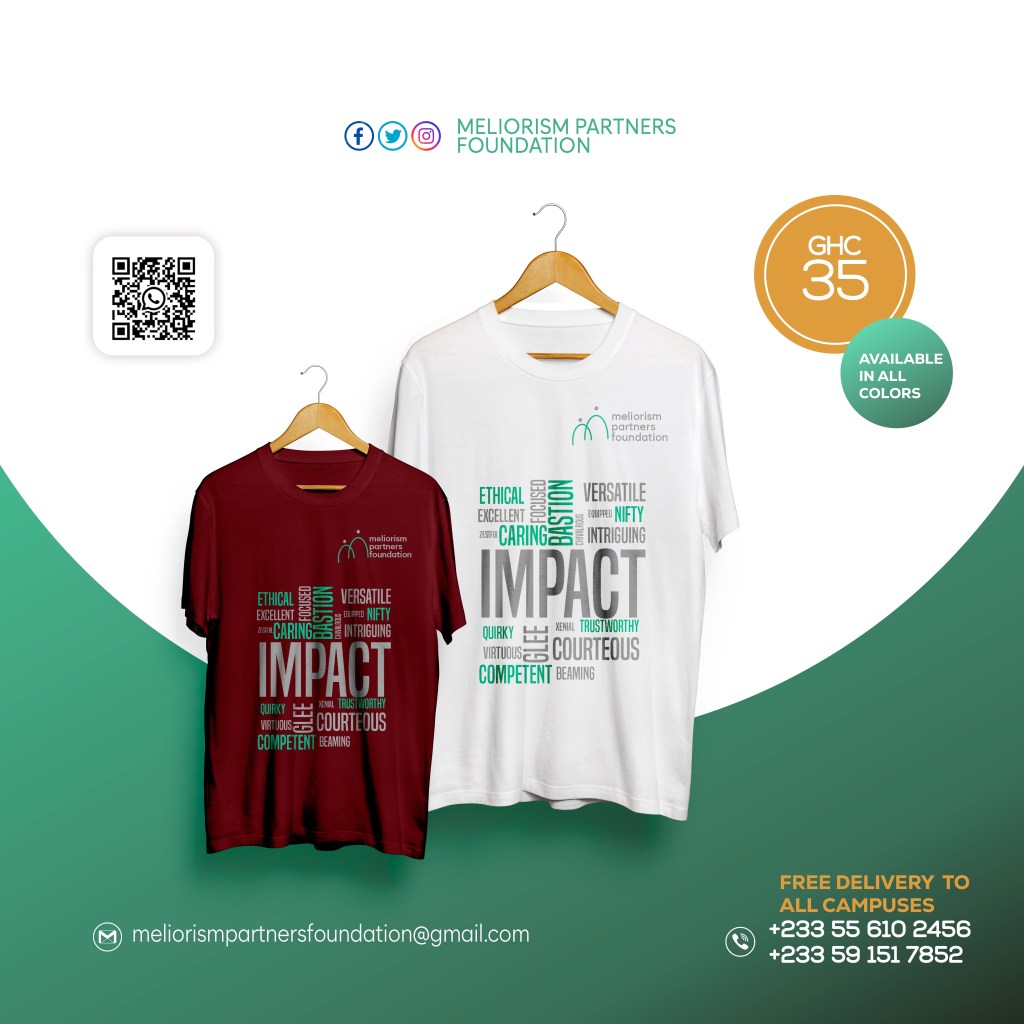
Introducing the Meliorism Partners Foundation T-Shirt!

Are you a proud member of the Meliorism Partners Foundation, dedicated to creating positive change in our communities? Show your support and solidarity with our brand new organization t-shirt!

Designed with our values in mind, this t-shirt represents the essence of Meliorism – the belief that we can continually strive for improvement and make a difference in the world. By wearing this t-shirt, you’ll not only look great but also spread awareness about our mission and inspire others to join our cause.

Here are some key features of our Meliorism Partners Foundation Organization T-Shirt:1. High-quality fabric: Made from premium materials, our t-shirt ensures a comfortable fit and long-lasting durability. It’s perfect for everyday wear or as a statement piece during events and gatherings. 2. Stylish design: Our t-shirt features a modern and eye-catching design that incorporates the Meliorism Partners Foundation logo. With its sleek and minimalistic look, it’s suitable for various occasions and can be easily paired with any outfit. 3. Available in multiple sizes: We understand the importance of inclusivity, which is why our t-shirt is available in a wide range of sizes for both men and women. From small to extra-large, we’ve got you covered! 4. Unisex fit: Our t-shirt is designed to be versatile and suitable for everyone, regardless of gender. Its comfortable and flattering unisex fit ensures that anyone can proudly wear it and represent our organization. 5. Affordable price: We believe in making our merchandise accessible to all our members. That’s why we’ve priced our t-shirt at an affordable rate, allowing you to show your support without breaking the bank.

By purchasing the Meliorism Partners Foundation Organization T-Shirt, you not only become a walking ambassador for positive change but also contribute to our ongoing initiatives. A portion of the proceeds from each t-shirt sold will go directly towards funding our community projects and programs.

Don’t miss out on this opportunity to showcase your dedication to making the world a better place. Join us in spreading the message of Meliorism by purchasing your very own Meliorism Partners Foundation Organization T-Shirt today!

To place your order or for more information, please visit our media handles or contact our dedicated customer support team. Together, let’s create a brighter future through Meliorism!

Overcoming Emotional And Psychological Trauma

WHAT IS TRAUMA?

According to the American Psychological Association (APA), trauma is “an emotional response to a terrible event like an accident, rape, or natural disaster.” However, a person may experience trauma as a response to any event they find physically or emotionally threatening or harmful.

A traumatized person can feel a range of emotions both immediately after the event and in the long term. They may feel overwhelmed, helpless, shocked, or have difficulty processing their experiences. Trauma can also cause physical symptoms.

Trauma can have long-term effects on the person’s well-being. If symptoms persist and do not decrease in severity, it can indicate that the trauma has developed into a mental health disorder called post-traumatic stress disorder (PTSD).

TYPES OF TRAUMA

• Acute trauma: This results from a single stressful or dangerous event.

• Chronic trauma: This results from repeated and prolonged exposure to highly stressful events. Examples include cases of child abuse, bullying, or domestic violence.

• Complex trauma: This results from exposure to multiple traumatic events.

EMOTION

An emotion is a spontaneous mental reaction, such as joy, sorrow, hate, and loveIt is a conscious mental reaction subjectively experienced as strong feeling usually directed toward a specific object and typically accompanied by physiological and behavioural changes in the bodyEmotions are responses to significant internal and external events.

PSYCHOLOGY

Psychology meaning is the study or science of the human mind or soul and its processes or activities. It involves how people behave, think, and feel, and how they are influenced by biological, environmental, and social factors. Psychology aims to describe, predict, analyse, and help people with their mental and behavioural problem


EMOTIONAL AND PSYCHOLOGICAL TRAUMA

Our memories trigger certain emotions. Some memories are good, while others might be bad. They can make us laugh or cry, depending on how much attention we give them. However, unknowingly some memories have a more significant impact on us

Painful memories that are tough to let go of may cause emotional and psychological trauma. We occasionally experience what seems like irreversible effects from unpleasant experiences, emotions, or the intense pain from an unforgettable moment

Highly stressful circumstances that shatter your sense of security and leave you feeling helpless in a dangerous world can lead to emotional and psychological trauma. You may struggle with troubling feelings, memories, and anxiety due to psychological trauma. You might also experience numbness, alienation, and a lack of confidence in other people.


EXAMPLES OF TRAUMATIC PEOPLE IN THE PEOPLE

• Tamar (2SAM 13)

• Hagar (Genesis 16)

• David struggled with troubling thoughts and despair (Psalm 38:4).

• Elijah was discouraged and worn down (1 Kings 19:4).

• Job suffered from grief, loss, and illness (Job 3:11).


Causes of Emotional and Psychological Trauma

Different individuals may respond differently to the same traumatic experience. Hence, it might not be traumatic for others, but it could be for you. Some root causes of psychological and emotional trauma are:

• unexpected occurrences such as a collision, injury, or violent attack,

• natural disasters,

• domestic abuse, physical or emotional abuse, bullying during childhood, and

• Constant dangers include having a life-threatening illness or living in a neighbourhood where crime is prevalent.

• War

• kidnapping


The frequently neglected factors include:

• surgery, particularly during the first three years of life,

• sudden death of a loved one,

• relationships that have been severed after a person invested a lot of emotion, and

• Experiences that were embarrassing or highly disappointing, especially when they involved intentional cruelty.

Symptoms/Signs of Emotional and Psychological Trauma

We all have many different physical and emotional responses to trauma. Do not criticize your own or other people’s responses because there is no “right” or “wrong” response. Your responses are REACTIONS THAT ARE USUAL CAUSED DUE TO UNUSUAL EVENTS.

Psychological & emotional signs:

• disbelief, denial, or shock,

• confusion and attention issues,

• angry, irritable, and moody,

• fear and anger,

• shame, guilt, and self-blame,

• excluding oneself from others when depressed or hopeless, and

• Having a distant or numb feeling.


Physical signs:

• nightmares or insomnia,

• fatigue,

• difficulty paying attention,

• rapid heart rate,

• anxiety and nervousness, and

• Pains and aches.

Methods for Recovering From Emotional and Psychological Trauma

1. Physical Method

2. Spiritual/Biblical method.

PHYSICAL METHOD

It varies from person to person how they recover from psychological and emotional trauma. The methods which work for one may not be effective for another. The options listed below might aid in your quest for healing, but not everyone will travel the same route. Finding your way may be easier if you have professional direction from a behavioural health provider.


A. Exercise and Body Movement

Exercise and movement can aid the nervous system’s recovery as trauma disturbs your body’s natural equilibrium. A half-hour or longer workout helps with both physical and emotional well-being. It also doesn’t have to happen all at once. It is just as beneficial to fit in a few 10-minute workout sessions throughout the day. The best exercises are rhythmic ones that use both your arms and legs. While engaging in physical activities like yoga, martial arts, or weightlifting, incorporate mindfulness by paying attention to your movements. This is a fantastic way to divert your focus from negative thoughts.

B. Connect With Others

Accept that lunch invitation or sign up for a hobby group to give yourself different things to think about because connecting with others is essential to healing. 

A little “me-time” is fine, but too much could be unhealthy. Consider contacting a behavioural health professional for assistance if talking to your friends or family causes discomfort. You can express your emotions here without fear of criticism. Counsellors can offer insight into your thoughts and suggestions for improving your outlook. Take part in social events. To keep your mind off traumatic memories and experiences, try to engage in “normal” activities. Make new friends or rekindle old friendships and meaningful past relationships. Being around people can help you feel better. Consider taking a class or joining a club to meet people who have similar interests to your own.

C. Ask For Assistance

You may feel better if you can find solace with a behaviouralhealth professional, spiritual guide, or a dependable family member. Even though it’s not always necessary to go into specifics about your trauma, everyone needs someone who will listen to them without judgment. Become a part of a support group for trauma victims. Connecting with a mental health professional who can motivate you, make you feel less alone, and speed up your healing is essential.


SPIRITUAL METHOD

We live in a broken world where bad things can happen even to Godly people – anything from accidents, loss, failure, abuse or even death. In all of these things, we can still hope in Jesus Christ knowing that He has overcome our pain and trauma and can heal us of emotional and psychological hurt.

Trauma is painful and how we wish there were no traumatised Christians, but reality shows us that there are. Jesus told His disciples that because of what this world is, we will face trials (John 16:33). The sin and brokenness of this world has brought about curses and tragedies that we will most probably face.

But God promises freedom from the trauma and hurt that we may face in this present age. Though there is sorrow and grieving today, God brings mercies in the morning fresh and renewed. God brings healing not just to the physical body, but even to the mind and to the soul. He is indeed our Jehovah Rapha who delivers us out of any brokenness and makes us whole in Christ

Satan’s lie: 

• You will never get past this emotion, event, etc. 

God’s truth:

• “He shall cover you with His feathers, and under His wings you shall take refuge; His truth shall be your shield and buckler. You shall not be afraid of the terror by night, nor the arrow that flies by day, nor the pestilence that walk in the darkness, nor the destruction that lays waste at noonday.”—Psalm 91:4-6

• “But may the God of all grace, who called us to His eternal glory by Christ Jesus, after you have suffered a while, perfect, establish, strengthen, and settle you.”—1 Peter 5:10

Satan’s lie: 

• God doesn’t care about your emotions. 

God’s truth: 

• “’Come to me, all you who labour and are heavy laden, and I will give you rest. Take my yoke upon you and learn from me, for I am gentle and lowly in heart, and you will find rest for your souls. For My yoke is easy and my burden is light.’”—Matthew 11:28-30

• “Therefore humble yourselves under the mighty hand of God, that He may exalt you in due time, casting all your care upon Him, for He cares for you.”—1 Peter 5:6-7

Satan’s lie: 

• God can’t be good. He caused this confusion and emotional trauma you experienced.  

God’s truth: 

• “For God is not the author of confusion but of peace…”—1 Corinthians 14:33

• “You intended to harm me, but God intended it for good to accomplish what is now being done, the savings of many lives.”—Genesis 50:20

Satan’s lie: 

• The trauma you experience is your fault, and you will forever live with it. 

God’s truth: 

• “Therefore, if anyone is in Christ, he is a new creation; old things have passed away; behold, all things have become new.”—1 Corinthians 5:17

• “’I, even I, am He who blots out your transgressions for my own sake; and I will not remember your sins.’”—Isaiah 43:25

Satan’s lie:

• You don’t need others to help you. 

God’s truth: 

• “And let us consider one another in order to stir up love and good works, not forsaking the assembling of ourselves together, as is the manner of some, but exhorting one another, and so much the more as you see the Day approaching.”—Hebrews 10:24-25

• “…not returning evil for evil or reviling for reviling, but on the contrary blessing, knowing that you were called to this, that you may inherit a blessing.”—1 Peter 3:9

 

Takeaway

It is important to understand the enemy’s desire is to use your past emotional trauma and experiences to infiltrate your thought life with negativity. He wants to keep you from moving forward, from experiencing the freedom you have available to you through Christ. If he can keep your thoughts swirling, then he can keep you stuck in the past rather than moving forward in what Jesus has for your future. 

The Bible is clear. The only way to overcome the enemy is by believing the truth found in the Word of God. Use the Word as your weapon to tear down strongholds linked to emotional trauma.

Are there lies the enemy uses against you day after day?

• Write them down. 

• Then write at least one Bible verse that speaks against the lie. 

• Meditate on it. 

• Discuss the truth of God’s Word and your emotional trauma with your community of faith.

• Ask God to help you step into the truth.

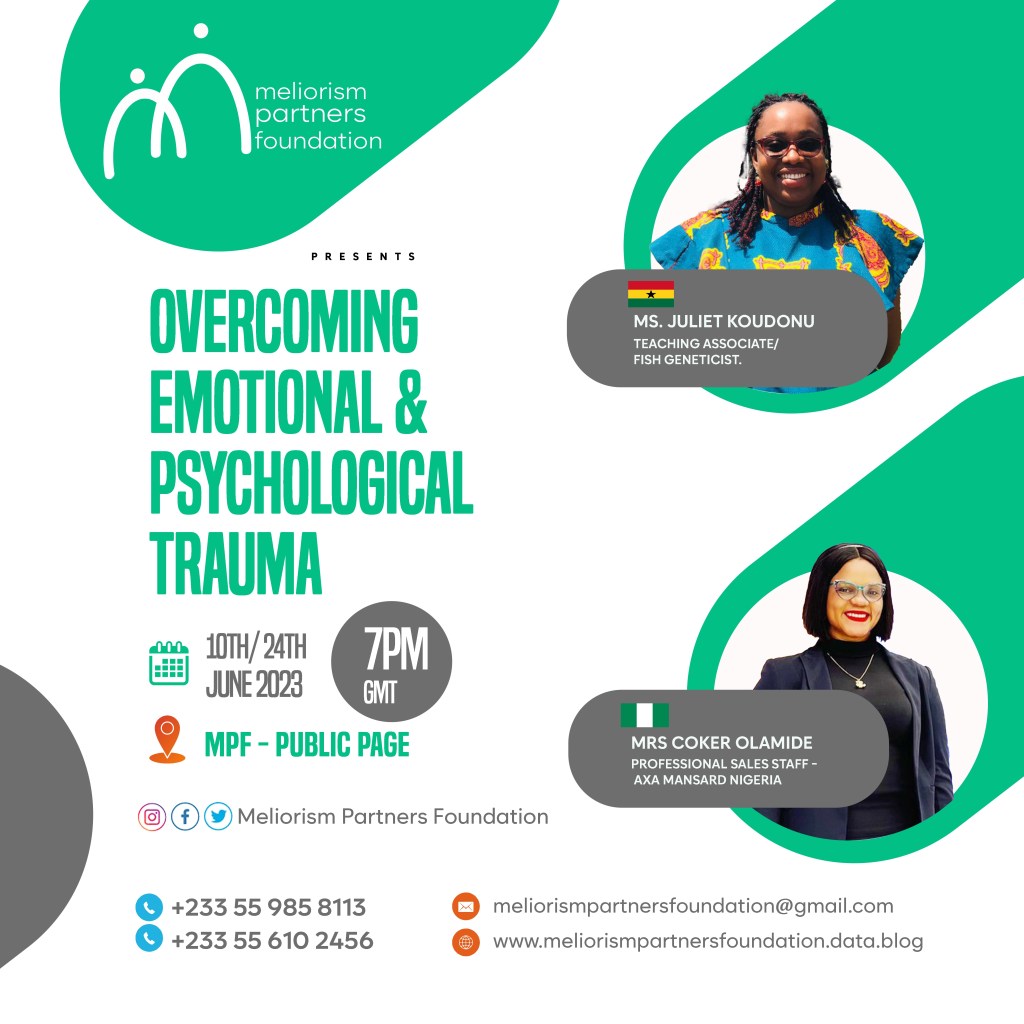
OVERCOMING EMOTIONAL AND PSYCHOLOGICAL TRAUMA

[10th/24th June,2023][7pmGMT🇬🇭]

Traumatic experiences often involve a threat to life or safety, but any situation that leaves you feeling overwhelmed and isolated can result in trauma, even if it doesn’t involve physical harm. It’s not the objective circumstances that determine whether an event is traumatic, but your subjective emotional experience of the event.

The more frightened and helpless you feel, the more likely you are to be traumatized.

Design a site like this with WordPress.com
Get started